
Our vision for Europe's low carbon future
Explore the cycle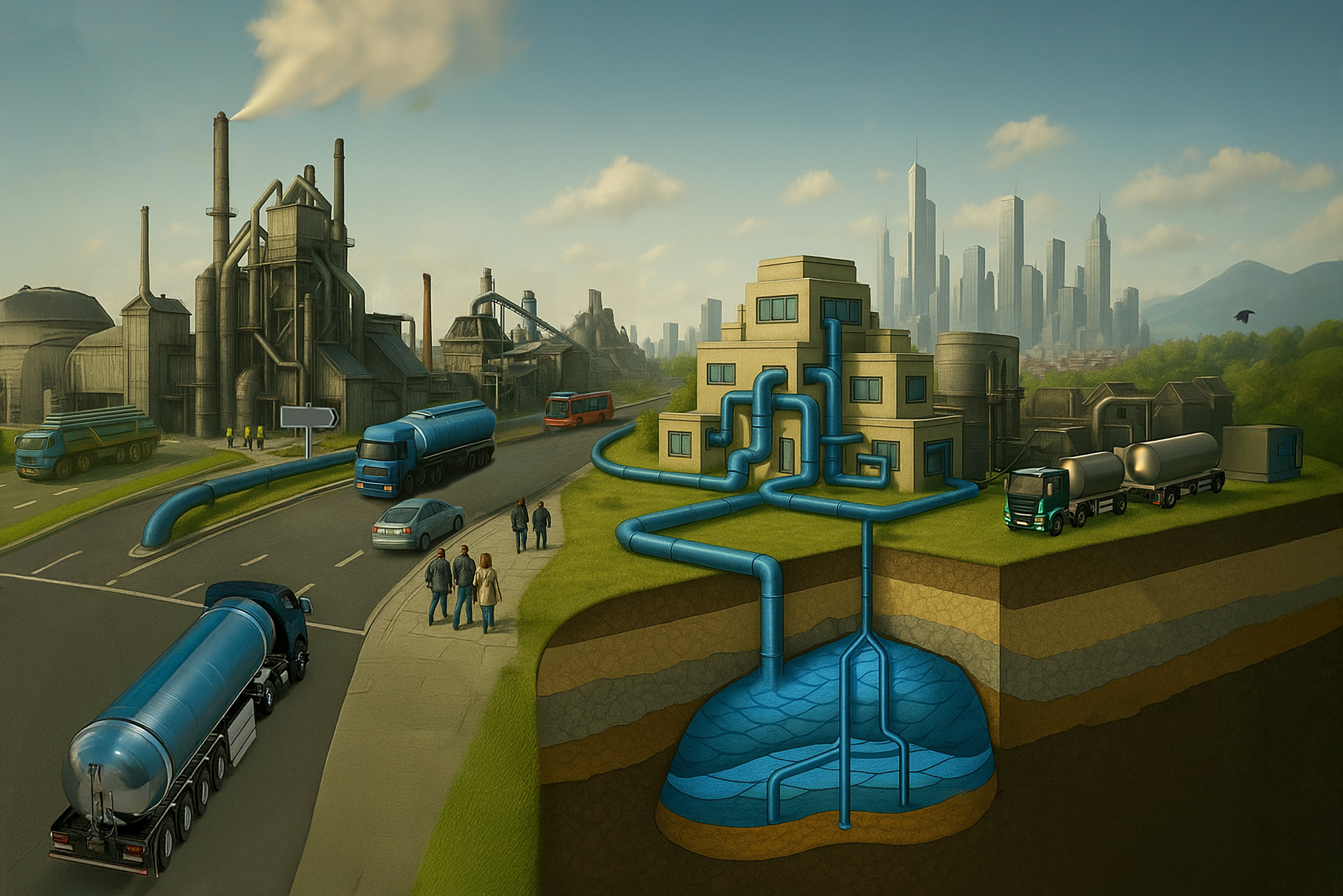
Accelerate carbon removals
- By 2040, carbon removal technologies will be essential—not just to tackle residual emissions, but to correct potential overshoots and actively reduce CO₂ in the atmosphere. Yet, Europe’s carbon removal economy is still in its infancy. The next 15 years are critical to build a thriving market, with clear business cases, robust guidelines, and strong climate benefits.
- Right now, the EU needs 400 million tonnes of carbon removal annually by 2050—but not a single permanent industrial project (like Direct Air Capture or BECCS) is operational in Europe. Why? There’s no economic incentive or obligation for companies to invest. Without urgent action, Europe risks falling behind.
-
What’s Needed Now:
- Legally binding 2040 and 2050 targets for carbon removal, integrated into EU climate policy.
- Simplified funding—ring-fenced budgets, de-risking tools, and a "funding compass" to navigate EU support schemes.
- Market integration—explore options like the EU ETS, Effort Sharing Regulation, or a standalone Removal Trading System to create demand.
- Industry confidence—clear, predictable budgets and reduced administrative hurdles to lower financing costs.
- The time to invest is today. With the right policies, Europe can turn carbon removal from a promise into a climate solution
Connecting emission to storage
- To reach net-zero by 2050, Europe must capture and store 280 million tonnes of CO₂ annually by 2040. But capturing CO₂ isn’t enough—it must be transported and stored. Currently, progress is stalled by uncertain demand, fragmented policies, and lack of funding. Without a robust transport network, industrial decarbonization will fail. Key Challenges & Solutions:
- National Strategies: Few EU countries have clear plans for CO₂ transport. National roadmaps are needed to map capture, transport, and storage routes, along with financial incentives.
- Regulation: Emitters won’t invest in capture without transport, and transport won’t be built without demand. Regulated access, fair pricing, and public funding is needed to break this deadlock.
- Standards: Inconsistent technical rules create confusion and risk. EU-wide standards for CO₂ transport would boost safety, public trust, and investment.
- Funding / De-risking: High upfront costs deter private investors. Targeted EU funds, guarantees, and auction mechanisms (like the European Hydrogen Bank) could de-risk projects.
- Cross-Border Cooperation: Storage sites are scarce in Southern Europe. Partnerships with the UK, Norway, and Mediterranean neighbors (e.g., Egypt) could provide solutions, but require aligned regulations and bilateral agreements.
Scale up CO2 storage capacity
Europe’s climate goals depend on scaling up CO₂ storage, fast. To make it happen, we need: Clear, Flexible Rules Smart regulations ensure safety and transparency without stifling innovation. The EU must fast-track technical standards and guarantee open access to storage and transport, especially for cross-border projects. Fair Access for All Regions Today, most storage capacity is concentrated in the North Sea, leaving other regions at a disadvantage. A comprehensive EU storage atlas will identify new sites, while tailored transport solutions (ships, pipelines, trains) ensure every industry can participate—no matter where they’re located. Enforceable Targets & Accountability The Net-Zero Industry Act’s storage targets must be implemented without delay. Companies need clear deadlines, reporting rules, and penalties to drive action. With storage projects taking 3–10 years to develop, every day counts. Support for Early Adopters Member States new to CO₂ storage need expertise and resources to get started. The EU should foster knowledge-sharing and funding to help regions build capacity and avoid delays. By focusing on regulation, regional equity, and enforcement, Europe can turn CO₂ storage from a challenge into a cornerstone of its net-zero future. The time to act is now.
Recognise residual emissions
The EU Emissions Trading System (ETS) currently classifies emissions as either fossil or biogenic, with biogenic emissions zero-rated under the Renewable Energy Directive. However, as the EU moves toward climate neutrality, it’s crucial to recognize a third category: residual emissions. Unlike abatable emissions, residual emissions—such as those from chemical reactions in cement, lime, or metal production—are often unavoidable, even after electrification and sustainable energy use. For example, cement production releases CO₂ during limestone calcination, and metal refining emits CO₂ as part of the process. These emissions persist unless the process itself is replaced or carbon capture is applied. The ETS revision should formally acknowledge residual emissions as a distinct category, ensuring fair treatment and incentivizing targeted decarbonization solutions
Drive demand for low-carbon products
- Despite progress in carbon management, a critical aspect of industrial decarbonization—demand-side measures—has been overlooked. The EU has focused on pushing emitters to invest in CCS technology, but the added costs risk making low-carbon products unaffordable for customers. To create a sustainable market, the EU must incentivize demand for these products, such as low-carbon cement or hydrogen. CCS Europe proposes three key measures:
- 1. Labelling Scheme: A system to inform consumers about a product’s carbon intensity, starting with EU ETS sectors like steel and cement, then expanding. Labels could link to tax breaks or support programs, with sector-specific targets for low-carbon products.
- 2. Public Procurement: Public tenders should include sustainability criteria, favoring low-carbon products through minimum requirements or non-price factors. This would align procurement with climate goals.
- 3. Private Sector Incentives: Public demand alone won’t suffice. A voluntary lead market, with standards requiring a minimum "Made in EEA" low-carbon content, could drive private-sector adoption.
- These steps would complement the EU ETS, making low-carbon products competitive and accelerating industrial decarbonisation
Unlock economic opportunity through CCS
The carbon capture and storage (CCS) value chain demands major investment and skilled expertise, from building infrastructure to safe operations. But the payoff could be huge: a fully developed CO₂ market in Europe could generate €60–133 billion in economic value and create 40,000–90,000 high-quality jobs (estimates from 2023). These roles, spanning capture, transport, and storage, offer a vital opportunity for regions historically reliant on fossil fuels. By reskilling workers and attracting new industries, CCS can turn economic challenges into sustainable growth, ensuring no community is left behind in the transition to net-zero. Beside reskilling worker and workforces, CCS can contribute to keeping existing jobs in Europe’s hardest to decarbonise industries such as lime, cement and aluminium in Europe. The pathway to decarbonise Europe’s continent is set – and CCS is the only way for sectors with process emissions to remain competitive also in the future.
I endorse the vision for Europe's low carbon future
Play your part in shaping Europe's low-carbon future:
Endorse our 2040 low-carbon vision and help us push decision-makers to act!