
At the launch of CCS Europe two years ago I said there was a gaping hole at the heart of European climate strategy. I said there were no technologies other than carbon capture that could prevent the emission of CO2 from all industrial processes. And I said that without CCS there would be no net-zero.
I step down now as director of this campaign body with the satisfaction of knowing that these views have all been confirmed by the European Commission. Its Communication on Industrial Carbon Management (thank you DG ENER) last year confirmed that 280 million tonnes of CO2 must be captured annually by 2040 if the EU is to be on track to meet its climate goals.
I step down knowing too that there are three commercial-scale carbon capture plants in operation within the EU, with the CO2 sent for horticultural or food production. There are seven or eight sizeable plants under construction that will send captured CO2 for permanent storage in rock formations deep underground. I’m encouraged that the Net Zero Industry Act (thank you DG CLIMA) requires 50 million tonnes of CO2 storage capacity to be created by 2030.
But I’m a believer, I want more, and this is not good enough for me.
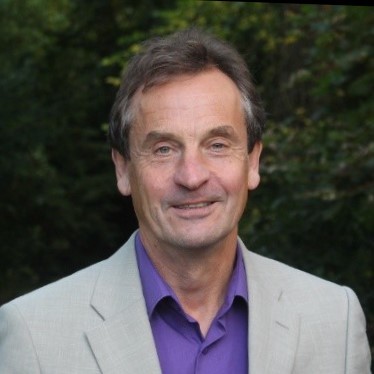
"It is 17 years since I was introduced to CCS as a parliamentarian. In another 17 years, if I am still around, I might be approaching 88. By that time, I hope industry will no longer be emitting CO2 and Europe will be a leader in the technologies than can prevent it." - Chris Davies, CCS Europe Adviser
As the European Parliament’s rapporteur for the CCS Directive in 2008 I travelled to the Sahara Desert and saw CO2 separated from natural gas being piped and pumped for underground storage instead of being vented into the atmosphere. It was just another industrial process - clean, normal and entirely convincing. Looking a month or so ago at a 10m tonnes capacity CO2 pipeline being laid amidst all the industrial activity at the Port of Rotterdam confirmed my view that CCS can be routine, just the next stage in the world’s industrial development.
Curbing industrial emissions is not enough if we are to slow and reverse climate change. The advantage of CCS technology is that it can reduce the concentration of CO2 already in the atmosphere. Capturing and permanently removing CO2 released from biogenic materials gives us negative emissions, without which the achievement of net-zero is impossible.
CCS Europe’s work draws the attention of policymakers to these issues, and we have had undoubted successes. Support for CCS to assist industrial decarbonisation amongst European parliamentarians has never been greater, though I wish it were expressed more vocally by S&D and Green MEPs. On this issue we should all be on the same side.
But we are far from where we need to be. To achieve the Commission’s 2040 aspiration, we need construction of a major CO2 capture facility to commence every single week somewhere within the EU. Too few Member States have adopted the support strategies needed to make it happen.
At heart I remain a politician, and I do appreciate the difficulties faced by decision-makers in Brussels, but the achievement of net-zero requires CCS, and if this is to be achieved, we need political leadership from Commissioners not just from their officials.
I want to thank my CCS support team for all they have done to help me. Thank you also to members of CCS Europe and the (simply ace) people who represent them. Good luck to Bergur Rasmussen, my successor as Director of CCS Europe.
It is 17 years since I was introduced to CCS as a parliamentarian. In another 17 years, if I am still around, I might be approaching 88. By that time, I hope industry will no longer be emitting CO2 and Europe will be a leader in the technologies than can prevent it.
My plea to Commissioners and sometimes colleagues Ribera, Séjourné, Jørgensen, and Hoekstra is this - please get out there, be champions of CCS, and persuade national ministers of the need to act.
--
By Chris Davies, Outgoing CCS Europe Director